




New Licensing Rules: Exchange Server 2019 and SharePoint Server 2019
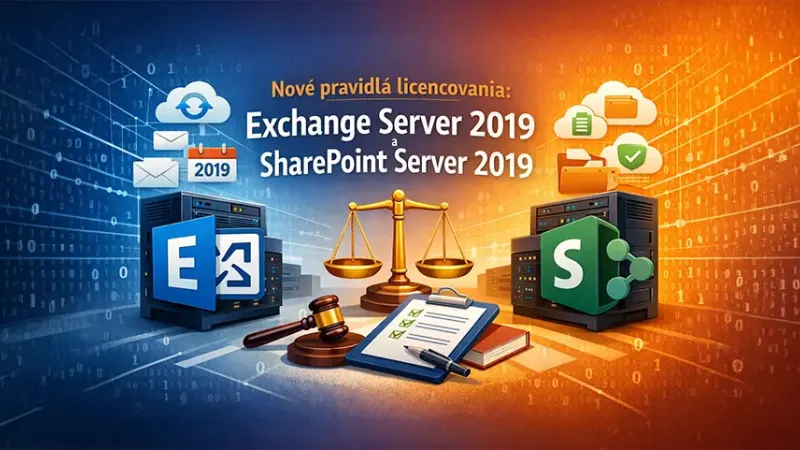
Microsoft has introduced changes to the licensing of its two key products – Exchange Server 2019 (email server) and SharePoint Server 2019 (document sharing and collaboration platform). What does this mean for regular businesses?
Exchange Server 2019
If you use Exchange for company email, the licensing principle remains the same:
- you need a server license
- a license for each user or device (so-called CAL).
The new development is that Microsoft is gradually moving toward a subscription model (Subscription Edition). This means that instead of a “perpetual” license, companies will need to pay for the right to use Exchange in the form of a subscription.
It is also important to note that support for the 2019 version will end in October 2025. Those who do not upgrade or migrate to the cloud in time will still be able to use paid “Extended Security Updates” – but these serve only as a temporary solution.
SharePoint Server 2019
Similar to Exchange, the Server + CAL model applies here as well. Every user accessing SharePoint requires a license.
A major change is that Microsoft now offers the SharePoint Server Subscription Edition. This version is available only through a subscription (Software Assurance). This means that if a company stops renewing its subscription, it loses the right to use SharePoint.
An exception applies to external users – if SharePoint is used by clients or partners outside the company, they do not need their own licenses.
What does this mean in practice?
- Companies should review what licenses they own and whether they have an active subscription.
- It is important to expect that perpetual licenses are gradually being phased out and replaced by subscriptions.
- Those who do not want to move fully to the cloud should at least prepare for this new model.
- Time matters – support for the 2019 versions is coming to an end.
If you have any questions, feel free to contact us.